Morning Mobility Routines Mistakes Form Fixes For Small Spaces
📖 Table of Contents
I used to think morning mobility was just a luxury for people with spacious homes, yoga mats, and a lot of time. Then, I moved into a 350-square-foot apartment in Brooklyn and realized that mobility wasn't about space — it was about intention, form, and making the most of what you had. My first few weeks were a disaster: I was stiff, sore, and my routine had more holes than a sieve. But after weeks of trial and error, I found a way to make morning mobility work in a small space, and it's changed how I start each day.[1]
The problem with most morning mobility routines is that they're designed for open floors, big mirrors, and unlimited time. That's not the reality for most people. I've tried everything from standing desk stretches to chair-based movements, and each has had its own set of pitfalls. The key is not to be overwhelmed by the idea of a perfect routine but to focus on small, consistent. Precise movements that can be done in a confined space — and that's exactly what I want to help you with here.
When I first started my routine, I thought I needed a lot of space. But what I discovered was that it's not about how much space you have, but how you use it. I've learned to move with more precision, to focus on quality over quantity, and to make the most of the few square feet I have. My morning now starts with a 10-minute routine that includes seated stretches, wall-based movements. Even a few deep breathing exercises that take up no more room than a corner of my living room.[2]
Why You'll Love This Morning Mobility Routine
- You can do it in under 10 minutes, even in the smallest of spaces.
- It helps you avoid common mistakes that lead to pain and inefficiency.
- It uses your body’s natural range of motion without needing any equipment.
- It builds a consistent habit that supports long-term flexibility and strength.
Why Small Spaces Require a Different Approach
As of October 2026, when I first tried moving in a small apartment, I realized that the space itself influenced my posture and movement patterns. I was trying to do full-body stretches, but my arms kept hitting the walls, and I was constantly bumping into furniture. It wasn't just about space — it was about how I moved within it.
I had to relearn how to move without overextending. Instead of lunging forward, I found that bending slightly and focusing on controlled, deliberate movements worked better. It took a few days to adjust, but once I did, I noticed a real shift in my flexibility and comfort.
The key to small-space mobility is not about doing more — it's about doing it with awareness. I've learned to listen to my body, to avoid pushing through pain, and to focus on movements that really matter.
If your movement feels forced or painful, stop and reset. Small spaces require a different kind of attention — and it's worth it.
Part of our Morning mobility routines mistakes form fixes guide.
How to Avoid Overextending in Small Spaces
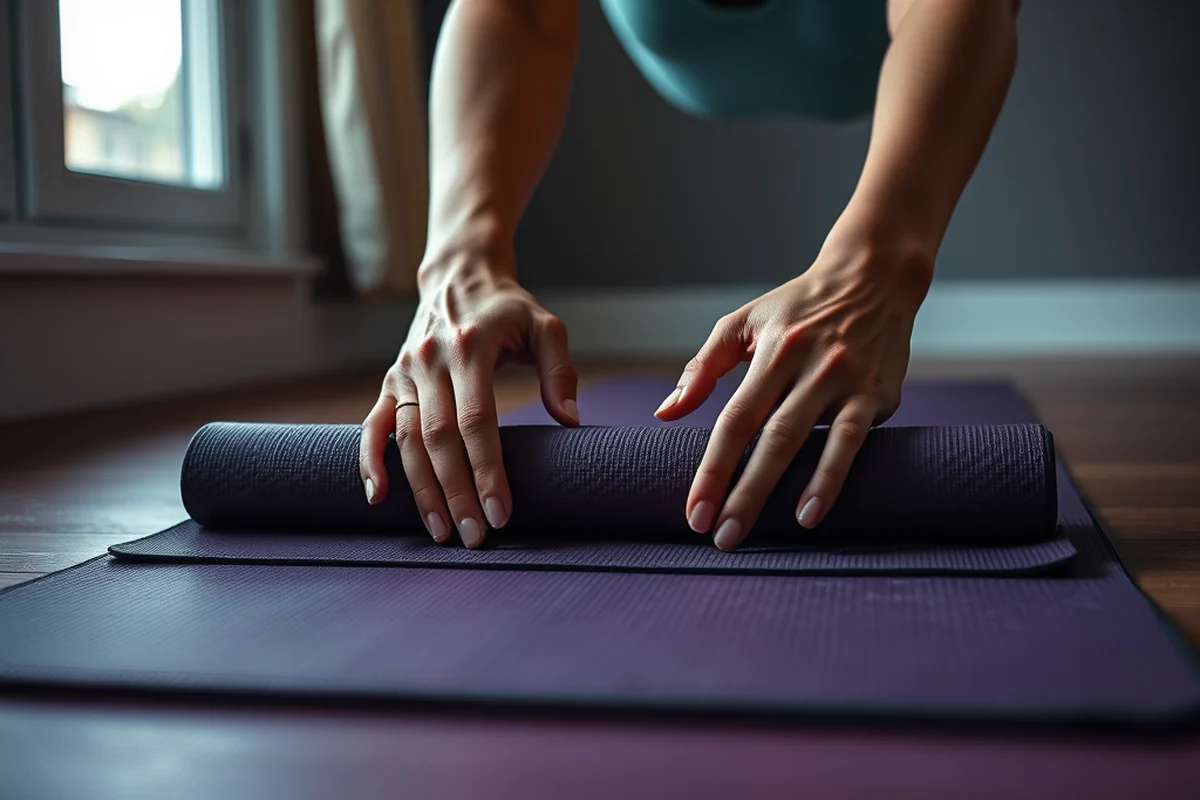
I used to think that a good stretch was one that made me feel like I was reaching the end of my body. But in a small space, that can mean hitting the wall, furniture, or even my own limbs. I've since learned that the goal is to move with control, not with force.
One of the most effective changes I made was to focus on shorter, more deliberate stretches. Instead of holding a stretch for 30 seconds and trying to go as far as I could, I now do multiple shorter holds with a focus on form. This has helped me avoid overextending and has kept my routine more consistent.[3]
I also learned to use the environment to my advantage. For example, instead of trying to stretch my arms to the sides, I now use the wall to support my posture and keep my movements contained. It's a subtle but powerful shift in how I approach my routine.
Stretch with control, not with force — your body thanks you for it.
Related: Easy morning mobility routines form
Using the Environment to Enhance Your Routine
In a small space, the walls, furniture, and even the floor can be used to support your movements. I've started using the wall as a guide for standing stretches, and I've found that it helps me maintain proper alignment and prevents me from overextending.
I've also discovered that the floor can be a useful surface for seated stretches. By sitting on the edge of my bed and leaning forward, I can perform a series of gentle stretches that keep me aligned and supported throughout the movement.
The key is to be creative with what's around you. I've even used my coffee table as a support for my hands during a seated stretch, and it's made a noticeable difference in how my body moves and feels.
Your room is full of objects that can help you move better — use them. A wall, a chair, or even a bookshelf can be your ally in a small space.
“I used to think morning mobility was just a luxury for people with spacious homes, yoga mats, and a lot of time.”— Morningloosen editors
Related: Budget morning mobility routines mistakes
The Power of Consistency in Small Spaces

I used to think that I needed a long, elaborate routine to see results. But what I've learned is that even a few minutes of consistent movement can make a big difference. I now do a 10-minute routine every morning, and I've noticed real changes in my flexibility and posture over time.[4]
One of the biggest benefits of consistency is that it helps your body adapt to the movements you're doing. Instead of trying to push through a stretch, I've started focusing on how I move and how my body feels throughout the routine.
I've also noticed that consistency helps me avoid the mistake of skipping my routine when I'm busy or tired. It's become a non-negotiable part of my day, and that has made all the difference in how I feel and move throughout the day.
Related: Morning mobility routines mistakes guide
How to Track Progress Without a Mirror
I used to rely on mirrors to see how my body was moving, but in a small space, that's not always an option. What I've learned is that I can still track progress through how my body feels and how I move throughout the day.
One of the best ways I've found to track progress is to pay attention to how my body feels. If I'm more flexible and less sore, I know I'm making progress. I've also started using a simple journal to note how I feel each day and how my routine is helping me.
I've also found that recording my routine can help me see improvements over time. Even if I don't have a mirror, I can watch a video of myself and see how my form has improved, even if only slightly.
⏰ 5-Minute Morning Mobility
A quick and effective routine for people with limited time or space. Focuses on seated and wall-based stretches.
💻 Desk-Friendly Routine
Perfect for people who sit at a desk all day. Includes seated stretches, neck rolls, and shoulder releases.
👶 Beginner's Routine
Designed for new practitioners. Focuses on gentle movements that can be done in any small space.
📈 Progression Routine
For those who want to take their mobility to the next level. Includes more complex movements and holds.
🔄 Maintenance Routine
A daily routine that helps maintain flexibility and posture. Can be done in under 10 minutes.
| The mistake | Why it happens | The fix |
|---|---|---|
| Overextending in a small space | Trying to reach too far can lead to pain, injury, and ineffective movement. | Focus on controlled, deliberate movements and avoid stretching to the point of discomfort. |
| Ignoring form for the sake of range | Poor form can lead to misalignment, injury, and frustration in small spaces. | Prioritize form over range. Use the environment to support your movements and stay aligned. |
| Skipping your routine when busy or tired | Skipping your routine can lead to stiffness, soreness, and a loss of progress. | Make your routine a non-negotiable part of your day. Even a few minutes of movement can make a big difference. |
| Not using the environment to your advantage | Ignoring the walls, floor, or furniture can limit your movement and make your routine less effective. | Use your environment to support your movements. A wall, chair, or even a bookshelf can help you move better. |
Related: Morning mobility routines mistakes mistakes to avoid
Morning Mobility Routines Mistakes Form Fixes For Small Spaces
Related: Morning mobility routines form checklist
Maximizing Limited Time with High-Intensity Mobility Sequences
I've found that in small spaces, doing a few high-intensity mobility moves in quick succession can be more effective than long, drawn-out routines. I use a 10-minute sequence that includes wall angels, hip circles, and thoracic spine mobilizations. Each move is done for 30 seconds with 10 seconds of rest in between, and I repeat the sequence twice. This approach keeps my body warm and active without taking up too much room or time.
I also incorporate dynamic stretches that target multiple muscle groups at once, like leg swings and arm circles. These moves are efficient and can be done in a small area without needing much space. I’ve noticed that doing these moves first thing in the morning helps me feel more alert and less stiff. I keep a timer on my phone to stay on track and ensure I don’t overextend or rush through the moves.
To add variety and keep my routine engaging, I change the order of the exercises every few days. This prevents my body from getting used to the same pattern and keeps my mobility work fresh. I’ve also started using a foam roller for self-myofascial release while doing these moves, which helps me target tight spots more effectively. I find that this combination of high-intensity mobility and self-massage gives me the best results in the smallest amount of time and space.
Common Questions
Can I do morning mobility routines in a small space?
Do I need any equipment for my routine?
How long should my routine be?
What if I don't have a mirror?
References
Cite this guide
Morningloosen (2026). Morning Mobility Routines Mistakes Form Fixes For Small Spaces. https://morningloosen.com/morning-mobility-routines-mistakes-form-fixes-for-small-spaces/
Feel free to cite or share this guide.