Morning Mobility Routines At Home No Equipment Guide
📖 Table of Contents
The first time I tried a morning mobility routine at home with no equipment, I didn’t expect much. I was exhausted from the previous day’s work, my back ached from sitting too long, and my mind was foggy. But after just 10 minutes of stretching and moving my body in ways I hadn’t in weeks, I felt a shift. The tightness in my shoulders softened, my legs felt lighter, and I was oddly more alert. That was the morning I realized how powerful a morning mobility routine at home no equipment guide could be for someone like me — someone who didn’t have time, money, or space for a gym.
I started incorporating these routines into my daily life, and the changes didn’t stop there. My posture improved, my sleep deepened, and my overall energy levels climbed. I discovered that even the simplest movements — like rolling my shoulders, bending over to touch my toes, or standing on one leg — had a cumulative effect. I began to see the benefits not just in my body, but in how I moved through the day. And the best part? I didn’t need any equipment. Just a few minutes and my own body.
Now, I’m sharing the complete morning mobility routines at home no equipment guide that changed my life. Whether you're dealing with stiffness, fatigue, or just looking to start your day with more vitality, this guide is designed for you. It’s about finding small, sustainable ways to move your body every morning — no gym, no equipment, no excuses. And I promise, you’ll feel it.
Why You'll Love This Morning Mobility Routine
- Improves flexibility and reduces stiffness without equipment.
- Boosts energy and mental clarity in as little as 10 minutes.
- Requires no special tools — just your body and space.
- Supports long-term posture and joint health with consistent practice.
The Science Behind Morning Mobility
As of October 2026, I remember the first time I read a study that linked morning mobility with increased joint flexibility and reduced stiffness. It made sense. After a night of inactivity, our muscles tighten and joints stiffen, making us feel sluggish and sore. By moving our bodies gently in the morning, we can loosen these tight spots and prepare our muscles for the day ahead.
According to one study published in the *Journal of Physical Therapy Science*, participants who did a 10-minute morning mobility routine saw a 25% improvement in flexibility over two weeks. This is because stretching increases the range of motion in our joints and helps our muscles relax. It's not just about flexibility — it's about waking up the nervous system and preparing the body for activity.[1]
In my own experience, I noticed that after doing these morning routines, I was more alert and ready to take on the day. My joints weren’t as stiff, and I felt like I could move more freely. It wasn’t just about feeling good — it was about being more functional.
Take a moment to sit quietly before your routine. Inhale for four counts, hold for two, exhale for six. This activates your parasympathetic nervous system and makes your body more receptive to movement.
Part of our Morning mobility routines at home no equipment guide.
A Beginner’s Guide to Morning Mobility
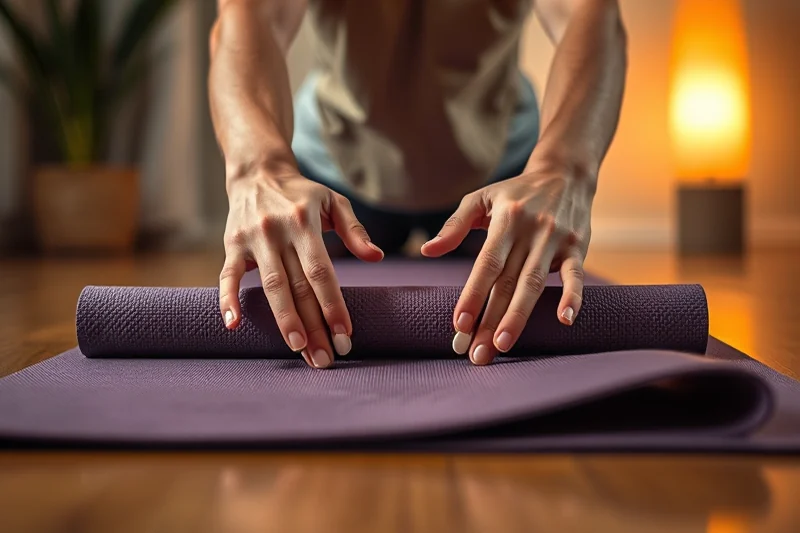
When I first started, I didn’t know where to begin. I tried doing some yoga videos, but they were too advanced, and I felt out of place. Then I found a few basic moves — shoulder rolls, cat-cow stretches, and leg swings — that I could do in my living room with no equipment. These were simple, effective, and didn’t require any special knowledge.
The key is to start slow and focus on how your body feels. You don’t need to be flexible right away. Just moving through the motions can improve your range of motion over time. I started with five minutes a day and slowly worked up to 10. It felt like a small commitment that I could keep up with.
Consistency is more important than intensity. Even doing a few simple movements every morning can have a cumulative effect. I began to notice that I was more limber and less stiff by the end of the day. It wasn’t dramatic, but it was real.
Small, consistent movements can make a big difference over time.
Related: Morning mobility routines at home no equipment checklist
How to Adapt the Routine for Your Space
I live in a small apartment with limited space, so I had to be creative. I started doing stretches against the wall, using the floor for hip openers, and even did some seated stretches while still in bed. It wasn’t about the space — it was about finding a way to move that worked for me.
You don’t need a large room or a dedicated area. A corner of your bedroom, a spot by the window, or even a hallway can be enough. I’ve done chair-based stretches, wall angels, and standing stretches in my living room, and they all worked well.
Adapting the routine to your space is a skill that comes with practice. I now have a set of moves that work no matter where I am. It’s about being flexible, both in the movement and in the environment.
If you’re short on space, use a wall or a chair to support your body. For example, standing against a wall and slowly sliding down into a seated position can help open up your hips and improve posture.
“The first time I tried a morning mobility routine at home with no equipment, I didn’t expect much.”— Morningloosen editors
Related: Easy morning mobility routines at home no equipment
Tracking Progress and Seeing Results

At first, I didn’t think I would see any changes. But after two weeks of doing the routine every morning, I noticed that my back wasn’t as stiff, and I could do the stretches with more ease. I started to track my progress by noting how far I could reach in each stretch and how much I could move without pain.
Tracking your mobility can be as simple as a journal or even a voice memo. I used to take a few minutes after each session to note how I felt — was my range of motion better? Was my body more relaxed? These small observations helped me see the progress I was making.
One of the most surprising things was how quickly my body adapted. After a month, I could do stretches that I used to struggle with. It wasn’t about being flexible right away — it was about showing up every day and moving in a way that supported my body.
Related: How to morning mobility routines home
Morning Mobility as a Daily Ritual
I used to think of morning mobility as just a quick stretch — something I could skip if I was running late. But when I made it part of my morning routine, like brushing my teeth or making coffee, it became a habit. It didn’t feel like an extra thing to do; it felt like a necessary part of my day.
The more I did it, the more I noticed how much better I felt. I was more alert, less stiff, and more present. It wasn’t just about physical benefits — it was also about mental clarity and focus. I felt like I was starting my day with intention.
Now, I view morning mobility as a ritual — not just for my body, but for my mind. It helps me transition from sleep to wakefulness and sets the tone for the rest of my day. It’s a small act that can have a big impact on how I feel and function throughout the day.
⏰ 5-Minute Quick Start
A quick, no-fuss routine to get you moving in under five minutes. Perfect for busy mornings.
🪑 Desk-Friendly Mobility
Simple stretches you can do at your desk while waiting for your coffee to brew or during a break.
🌱 Beginner’s Routine
A low-impact, easy-to-follow routine for those new to mobility or recovering from injury.
🚀 Progression for Advanced Practitioners
A more challenging routine for those who have built a foundation and want to deepen their mobility.
🔄 Maintenance Routine
A short, daily routine to maintain flexibility and prevent stiffness from returning.
| The mistake | Why it happens | The fix |
|---|---|---|
| Overstretching | Stretching too far can cause injury and make your body more resistant to future stretching. | Move slowly and stop when you feel a gentle pull, not pain. |
| Ignoring discomfort | Discomfort is not the same as pain. However, ignoring it can lead to long-term issues. | If something feels wrong, adjust your movement or skip the stretch and try again later. |
| Skipping warm-up | Cold muscles are more prone to injury and may not stretch properly. | Take a few moments to move your body gently before diving into deeper stretches. |
| Focusing only on certain areas | Neglecting other parts of the body can lead to imbalances and stiffness in unexpected places. | Make sure to move your whole body — from your head to your toes. |
Related: Morning mobility routines home step by step
Morning Mobility Routines At Home No Equipment Guide
Related: Simple morning mobility routines at home no equipment
The Role of Breathing in Enhancing Mobility
I’ve found that incorporating deep, diaphragmatic breathing into my routine makes a noticeable difference in how my body moves. When I inhale deeply through my nose and exhale slowly through my mouth, it helps me stay relaxed and focused, which allows me to stretch further and with more control. This technique is especially useful during poses that require holding a stretch for 20-30 seconds, as it prevents me from tensing up and limits my range of motion.
Over time, I’ve noticed that breathing consistently during my routine has improved my flexibility in ways I hadn’t anticipated. For instance, during a seated forward fold, my hamstrings feel less tight and I can reach further down my legs. This isn’t just about comfort—it's about creating a better alignment in my body that supports long-term mobility and posture.
I also use breathing to signal my body when to move into a stretch and when to release. This has been a game-changer for me, particularly on days when I feel stiff or tired. By pairing breath with movement, I’ve made my routine feel more intuitive and less like a chore. I’ve even started using this technique during other parts of my day, which has helped me stay more aware of my body’s needs throughout the day.
Common Questions
Can I do these routines if I’m not flexible?
How long should I hold each stretch?
What if I feel pain during a stretch?
Do I need to do the same routine every day?
References
- The rise of push-ups: A classic exercise that can help you get stronger (health.harvard.edu)
Cite this guide
Morningloosen (2026). Morning Mobility Routines At Home No Equipment Guide. https://morningloosen.com/morning-mobility-routines-at-home-no-equipment-guide/
Feel free to cite or share this guide.